The First 48 Hours: A Facility Manager's Hour-by-Hour Response to an Environmental Release
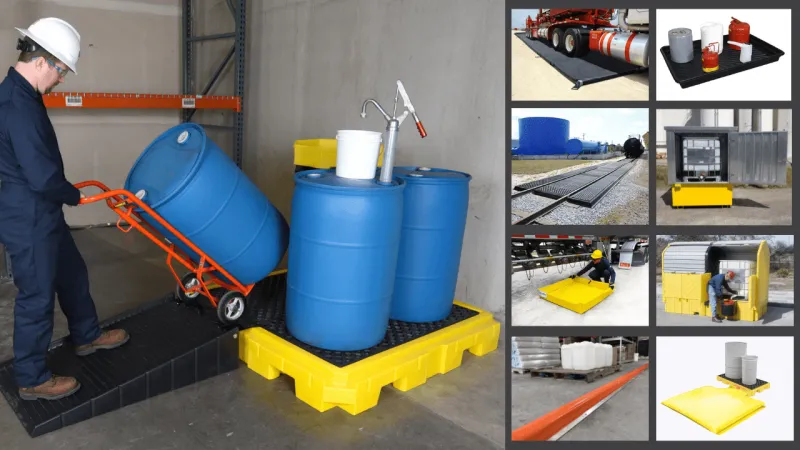
Photo: industrial spill response team containment drums safety facility, via spillcontainment.com
Ask any environmental attorney or regulator what separates a routine incident from a costly enforcement case, and the answer is rarely the size of the spill. It is the response. Facilities that move deliberately in the first two days — notifying correctly, containing safely, and documenting everything — routinely close incidents without penalty. Facilities that improvise frequently convert a manageable event into a six-figure problem.
What follows is a practical framework for the critical 48-hour window. Adapt it to your site, print it, and keep it where your team will actually find it.
Hour 0–1: Stabilize and Assess
Stop the source. Close valves, upright containers, plug drains — whatever safely halts the release. Employee safety overrides every other consideration, including regulatory deadlines. No notification obligation justifies exposing staff to an uncontrolled hazard.
Make the initial characterization. Identify the material (consult the SDS), estimate the quantity released, and determine where it went: contained on-site, into a storm drain, into soil, toward a waterway. These three facts — what, how much, where — drive every decision that follows.
Protect the drains. If any material threatens a floor drain or stormwater inlet, deploy drain covers or berms immediately. A release that reaches a storm sewer can trigger obligations that an identical release contained on concrete never will.
Hour 1–4: Determine Your Notification Obligations
This is where many facilities stumble. Multiple notification frameworks can apply simultaneously, and they have different triggers.
- Federal release reporting (CERCLA/40 CFR 302): Certain hazardous substances have reportable quantities; a release at or above the RQ generally requires notifying the National Response Center at 800-424-8802.
- Clean Water Act: Releases of oil or hazardous substances reaching navigable waters — or posing a threat — carry separate reporting duties.
- State and local requirements: Most states operate their own spill hotlines with thresholds frequently lower than federal ones. Some municipalities add further layers.
- Air releases: Significant releases of certain substances can trigger additional obligations under CAA Section 304.
Keep a one-page notification matrix — federal, state, and local numbers with their thresholds — posted in the control room. In the moment, no one should be searching websites.
A critical caution: if you are uncertain whether a threshold is met, consult counsel or a qualified environmental professional before deciding not to report. Late reporting is a violation; so is a failure to report. But a documented, reasoned determination carries far more weight than silence.
Hour 4–24: Contain, Document, Escalate
Contain within capability. Absorb, dam, or divert only what your team is trained and equipped to handle. Anything beyond routine absorbent response belongs to professionals. Well-intentioned overreach — employees entering vapor zones, washing material into storm drains — has escalated countless incidents.
Start the incident log now. Assign one person to record times, actions, quantities, weather, and communications. Photograph the source, the migration path, and the containment effort before cleanup alters the scene. Regulators evaluating an incident months later rely heavily on contemporaneous records; memory is not evidence.
Notify internally up the chain. Corporate environmental, legal, and insurance carriers typically have contractual notice deadlines measured in hours, not weeks. Missing an insurer's notice window can forfeit coverage entirely.
Retain samples where warranted. If the release left your property or reached soil, pre-cleanup samples establish conditions and scope. Once remediation begins, that baseline is gone.
Hour 24–48: Bring in the Professionals and Frame the Record
Engage a qualified environmental contractor. For anything involving soil impact, off-site migration, or regulatory notification, professional response is not optional. When you call, provide the material identity, estimated volume, affected media, and site access details — the same facts from Hour 0.
Prepare for the regulator's call. If you have reported, expect follow-up questions: What was released? Is it contained? What is the cleanup plan? Have written, factual answers ready. Stick to what is known; speculation in an early call has a way of becoming a permanent part of the file.
Preserve everything. Incident logs, photographs, SDS sheets, sample results, contractor manifests, and correspondence belong in a single incident file. This file becomes the backbone of any closure report, insurance claim, or enforcement defense.
Draft the internal summary. A concise written account — timeline, actions, notifications, corrective steps — completed within 48 hours protects institutional knowledge while details remain fresh.
The Mistakes That Turn Incidents Into Cases
Across enforcement dockets, a handful of errors recur:
- Underestimating the release, then revising upward — which reads to regulators as evasion.
- Washing material toward storm drains during cleanup, converting a contained spill into a water-quality violation.
- Incomplete documentation, leaving regulators to reconstruct events from assumptions.
- Missing state or insurer deadlines while focusing exclusively on federal requirements.
- Discouraging documentation out of liability fears — a strategy that never survives contact with an investigation.
Make the Playbook Real Before You Need It
The best time to build this capability is not during an incident. Verify your notification matrix is current, confirm your contractor's emergency response terms, run a tabletop exercise annually, and post the hour-by-hour framework where operators will see it.
When a release happens, you will not rise to the occasion — you will fall to the level of your preparation. Facilities that prepare close incidents. Facilities that improvise make headlines.