From Liability to Leverage: The Executive's Guide to Redeveloping Impaired Property
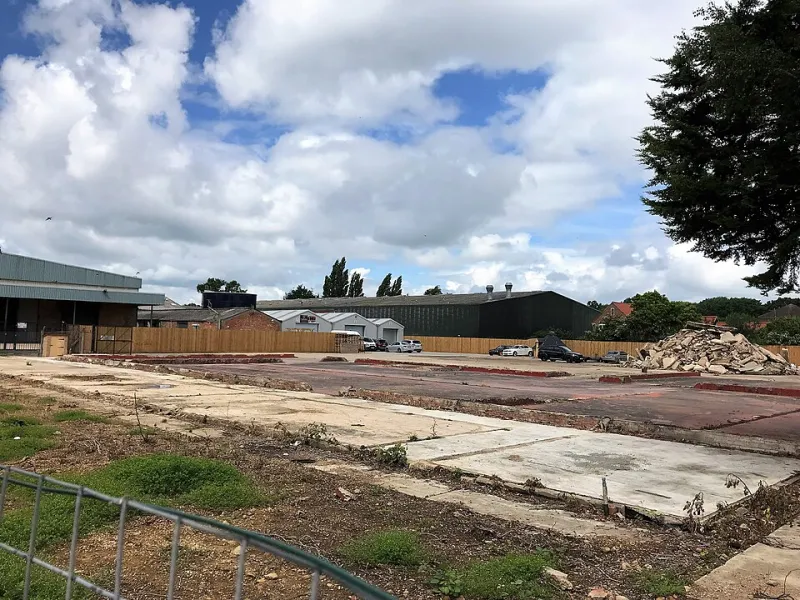
Photo: Richard Humphrey , CC BY-SA 2.0, via Wikimedia Commons
For decades, the standard corporate posture toward contaminated land was simple: avoid it. Purchase agreements contained blanket environmental denials, lenders shied away from impaired collateral, and parcels with a hint of historical industrial use sat vacant behind chain-link fencing in otherwise desirable locations.
That posture is changing. Rising land costs in prime logistics corridors, expanding state incentive programs, and a maturing federal framework have made impaired property one of the more interesting acquisition opportunities available to American businesses. The companies capturing that value share one trait — they approach the process methodically rather than opportunistically.
Why the Discount Exists
Impaired property trades below market rate because uncertainty is expensive. Buyers fear open-ended remediation obligations, third-party lawsuits, and regulatory enforcement that could dwarf the purchase price. That fear is rational, but it is also frequently outdated.
The Small Business Liability Relief and Brownfields Revitalization Act, along with the EPA's framework for bona fide prospective purchasers, allows new owners to limit federal liability provided they conduct appropriate due diligence before acquisition and cooperate with regulators afterward. In plain terms: the law rewards buyers who investigate thoroughly and proceed with eyes open.
State voluntary cleanup programs (VCPs) add a second layer of protection. Most states — from Michigan to Texas to New Jersey — offer a formal pathway in which the regulator reviews a cleanup plan, issues a covenant not to sue or a no-further-action letter upon completion, and closes the loop. That letter is often the difference between a parcel no bank will finance and one a lender underwrites without hesitation.
Where the Value Concentrates
Not every impaired site is worth the effort. The opportunities that consistently pencil out share three characteristics.
Location first, contamination second. A former manufacturing site near a rail line, interstate interchange, or growing urban core carries intrinsic value regardless of its history. Remediation costs are relatively knowable; location premiums are not negotiable.
A documented environmental history. Sites with existing Phase I and Phase II assessments, prior regulatory files, and known plume boundaries are easier to price than sites with decades of undocumented use. Paradoxically, a well-characterized problem is worth more than a vague one.
Program eligibility. Properties already enrolled in a state VCP, or eligible for EPA Brownfields assessment grants, offer defined timelines and liability protections. Sites outside these frameworks can still be viable, but the negotiation leverage shifts.
A Five-Step Evaluation Roadmap
1. Screen before you fall in love. Before touring a site, pull the regulatory record: EPA databases, state spill files, historical aerial photography, and Sanborn fire insurance maps. A desktop review costing a few thousand dollars will eliminate the majority of unsuitable candidates.
2. Quantify the contamination, not just the risk. Commission a Phase II investigation with enough sampling to bound the problem. The objective is not a perfect picture — it is a defensible cost range for remediation. Engage an environmental consultant with direct experience in the state's VCP; program experience materially affects timelines.
3. Model the all-in cost. Remediation estimates belong in the purchase model alongside acquisition price, entitlement costs, and construction. Sophisticated buyers negotiate price reductions, escrow holdbacks, or environmental insurance to bridge the gap between estimated and actual cleanup costs.
4. Secure the liability pathway. Enter the state voluntary cleanup program, obtain prospective purchaser status where available, and document institutional controls — such as engineering controls or land use restrictions — in the final agreement.
5. Build remediation into the development schedule. The strongest brownfield projects integrate cleanup with site preparation rather than sequencing them. Coordinated execution routinely compresses twelve to twenty-four months from a conventional timeline.
The Pattern Across Successful Projects
Across the country, the same story repeats with different details. Distribution companies have built fulfillment centers on former foundry sites near interstate interchanges. Healthcare systems have placed clinics on remediated downtown parcels where greenfield alternatives simply do not exist. Manufacturers have consolidated operations onto their own legacy properties, converting idle land into expanded capacity without purchasing a new footprint.
The common thread is not aggressive risk-taking. It is disciplined evaluation — enough investigation to price the liability, enough program participation to cap it, and enough patience to let incentives and due diligence do their work.
The Bottom Line for Leadership Teams
Impaired property will never be the easy option. It demands stronger due diligence, more sophisticated transaction structuring, and a consulting partner who understands both the science and the regulatory machinery. But for organizations willing to engage the process properly, the discount is real, the liability protections are codified, and the locations — often the industrial hearts of growing American metros — are unavailable at any price through conventional channels.
The parcels other companies walk away from are frequently the ones worth a second look.