The Quiet Repricing: Why PFAS Contamination Is Already Moving Commercial Property Values

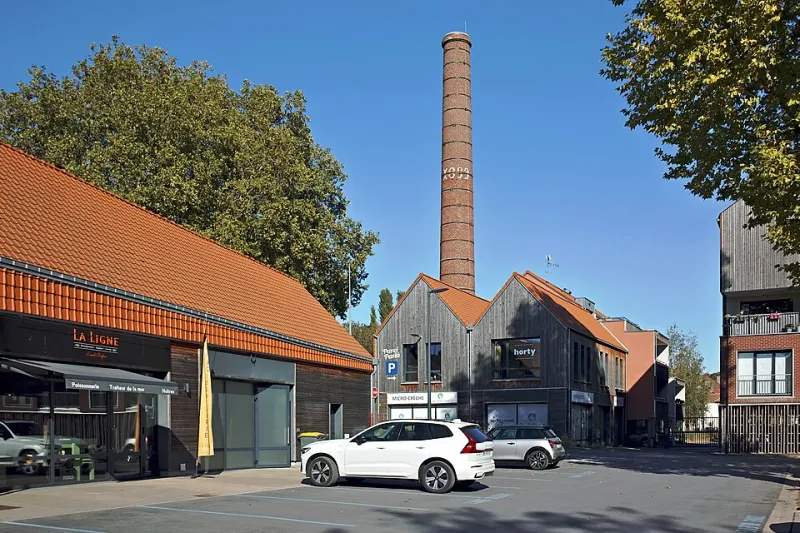
Photo: Taxiarchos228, CC BY 3.0, via Wikimedia Commons
There is a familiar rhythm to how the American market absorbs an environmental liability. First, the science is contested and the risk is dismissed as a problem for someone else. Then regulators begin to move, slowly. Then lenders and buyers—responding to regulation, litigation, and insurability—reprice the risk quietly, well before any statute requires anyone to do anything. By the time the law catches up, the market has already decided.
Asbestos followed this arc over four decades. PFAS is compressing it into roughly one.
The Regulatory Ground Is Shifting Beneath Existing Assets
In 2024, EPA finalized its designation of PFOA and PFOS as hazardous substances under CERCLA, and established enforceable drinking water standards at parts-per-trillion levels—among the lowest ever set. States have not waited for federal action. Michigan, New Jersey, New York, Wisconsin, and a growing list of others have adopted their own PFAS standards and cleanup programs, and several have begun requiring facilities that handle PFAS to report discharges.
For property owners, the practical consequence is subtle but significant: a parcel that was clean under the standards of 2015 may not be clean under the standards of today. Contamination that was never sampled was never found, and PFAS was rarely sampled. Fire training areas, airports, plating shops, textile operations, landfills, and sites near any of them are now candidates for findings that would not have appeared on a Phase I conducted a decade ago.
How the Market Is Repricing the Risk
The clearest signals are coming from transactions, not rulemaking.
Lenders' environmental diligence questionnaires now routinely ask about PFAS use, storage, and proximity to known release sites. Some have begun requiring Phase II sampling with PFAS analytes for industrial collateral. Environmental consultants report that buyer-driven Phase I ESAs increasingly flag PFAS as a recognized environmental condition—a designation that, in practice, means a purchase price adjustment, an escrow holdback, or a walk-away.
Insurance markets are moving in parallel. Carriers have restricted PFAS-related coverage, added exclusions, and raised premiums for industries with plausible exposure. Insurability, more than any statute, is what turned asbestos from a health concern into a balance sheet event. The same mechanism is now engaging.
And the litigation exposure is not hypothetical. Utilities, manufacturers, and even passive landowners have been named in suits over PFAS releases, and settlements in the water utility cases have run to billions. Title and transaction attorneys are beginning to treat PFAS findings as they once treated USTs: as items that must be resolved before closing, not after.
The Owner's Playbook
An opinion piece is only useful if it comes with a recommendation, so here is ours: act while the decision is still yours.
- Know your footprint. Inventory historical and current PFAS use on your properties—aqueous film-forming foam, fluoropolymers, treated materials, plating line mists. What you never used, you likely never released.
- Sample before someone else does. A targeted PFAS investigation, conducted on your own timeline, gives you defensible data and, where findings exist, access to state voluntary cleanup programs and their liability protections.
- Paper the transfer. If you're acquiring, negotiate PFAS-specific representations, escrows, and environmental insurance. If you're selling, a clean report is the cheapest marketing asset you'll ever buy.
- Track your states. PFAS regulation is a patchwork, and the strictest applicable standard is the one that governs your planning.
The A1 Standard for a Moving Target
Asbestos taught the market an uncomfortable lesson: the liability was always there; only the awareness was missing. PFAS differs in one important respect—this time, owners have been warned. The properties that will hold value through this transition are the ones whose owners chose diligence over denial.
The market is already pricing this in. The only open question is whether the price reflects managed risk or discovered risk. At A1 Enviro, we'd argue that distinction is worth everything.