From Filling Station to Founders' Row: The Funding Machinery Behind Small-Town Brownfield Turnarounds
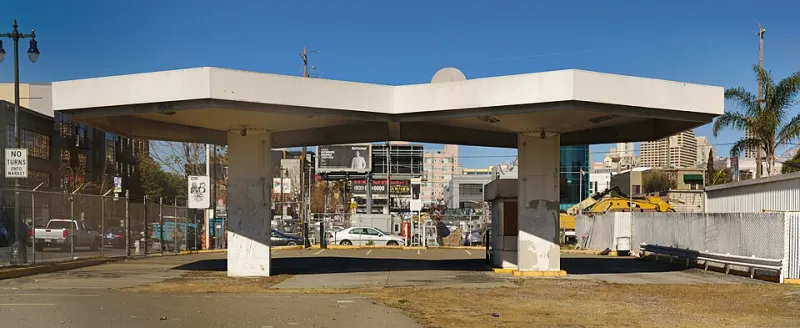
Photo: Dllu, CC BY-SA 4.0, via Wikimedia Commons
On the corner of a two-lane road in central Ohio, a former fuel station that sat vacant for sixteen years now houses a coffee roaster and a small accounting firm. A few states over, a defunct dry-cleaning operation has been reborn as a physical therapy clinic. These transformations rarely make headlines, but they share a common thread: neither project would have penciled out without public brownfield funding.
For property owners and developers eyeing impaired parcels in small markets, understanding how that money moves — and why some applications rise while others stall — is the difference between a viable project and a dead one.
Where the Money Actually Comes From
The federal backbone is the EPA's Brownfields Program, which distributes assessment grants, cleanup grants, and multipurpose grants to states, municipalities, tribes, and quasi-public entities. Critically, private developers cannot apply directly for most of these dollars. Instead, a city or county applies, wins the award, and then uses it to assess or remediate sites — often the applicant's own parcel.
Layered on top are state-level programs that vary considerably. Some states run revolving loan funds offering below-market financing for cleanup; others provide tax increment financing, voluntary cleanup program credits, or liability protections that, while not cash, materially reduce lender risk. Many rural projects stack two or three of these instruments together.
The practical implication: your first conversation should not be with a bank. It should be with your state's brownfield coordinator or regional planning commission, who can map which funding streams your site touches.
What Makes a Site Eligible — And What Doesn't
Brownfield programs are built around a specific definition: a property whose expansion, redevelopment, or reuse is complicated by the presence or potential presence of a hazardous substance, pollutant, or contaminant. Former petroleum sites, parcels with historical industrial use, and properties with unrecognized environmental conditions all typically qualify.
Disqualifiers are less obvious but decisive. Sites listed on the National Priorities List are generally out. So are facilities subject to ongoing enforcement actions, properties where the applicant caused the contamination (with important exceptions for innocent purchasers and bona fide prospective purchasers), and sites where disposal occurred after key statutory dates. A Phase I Environmental Site Assessment is essentially a prerequisite in every program — reviewers will want to see recognized environmental conditions documented before any cleanup dollars flow.
Timing matters too. Applicants who arrive with a completed Phase I, a conceptual site model, and a reuse plan consistently outperform those who show up with only an address and an idea.
The Application Realities
Federal cleanup grants are competitive and cyclical, typically announced in the spring with awards the following year. Reviewers score heavily on community involvement, economic benefit, reuse planning, and the degree of need — which is why small towns with documented blight and a credible end-user often punch above their weight.
State programs are frequently less competitive and faster. Revolving loan funds in particular can close in months rather than the year-plus horizon of an EPA cleanup grant. Many successful projects use state assessment dollars first, build the data package, then pursue federal cleanup funds with a much stronger record in hand.
One recurring misstep: treating the environmental work as a line item to be minimized. Programs scrutinize cost reasonableness, and a cleanup scope built on guesswork invites both rejection and change orders later. A defensible remediation estimate, grounded in real sampling data, is itself a competitive asset.
Getting In Line
For owners holding a legacy gas station, a shuttered machine shop, or a parcel with an old solvent plume, the sequence is fairly consistent. Commission a Phase I assessment to establish the environmental baseline. Engage your state's voluntary cleanup or brownfield program early — enrollment often locks in liability protections that lenders require. Align your reuse plan with local economic development priorities, since community benefit carries real scoring weight. And build the funding stack in parallel rather than in sequence, because the programs have different clocks.
The gas stations and dry cleaners being reborn across small-town America were not lucky. They were sequenced correctly — assessed, enrolled, funded, and remediated in an order that kept lenders comfortable and grants flowing. That machinery is available to any owner willing to learn how it runs.