The Visitor Badge Problem: When Third-Party Hands Touch Your Regulated Waste
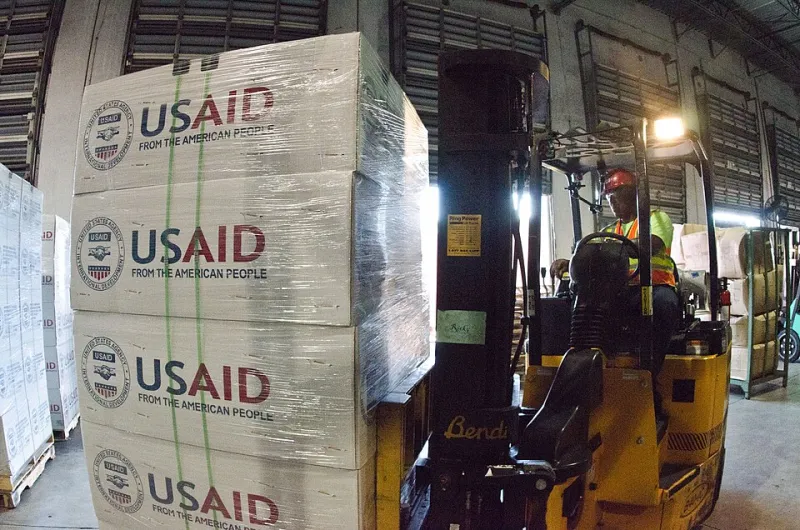
Photo: U.S. Department of Agriculture, Public domain, via Wikimedia Commons
Ask a facility manager who handles the hazardous waste at their site, and you'll get a list of names. Ask who else could handle it, and the room usually goes quiet.
Under RCRA, the generator designation attaches to the waste, not the workforce. Whether a drum of spent solvent is moved by a twenty-year employee with annual training certificates or a staffing-agency worker on day three, the regulatory exposure lands in the same place: on the generator. Yet across American manufacturing and logistics operations, the people physically closest to waste accumulation areas are frequently the least likely to appear on any training roster.
The Enforcement Pattern Nobody Plans For
Federal and state enforcement dockets tell a consistent story. In documented cases, violations trace back to third parties — a forklift operator from a temp agency who consolidated unlabeled containers, a delivery driver who signed a manifest without authority to do so, a contractor whose crew staged waste in a storm-drain-adjacent corner of the yard.
The manifest signature deserves particular attention. EPA regulations under 40 CFR 262 require that hazardous waste shipments be signed by the generator or an authorized representative. When that authorization is informal — a nod from a supervisor, a standing habit of letting whoever is available handle the paperwork — the generator has effectively outsourced a legal attestation to someone with no understanding of what they're certifying. An incorrect waste code, a miscounted container, a shipment leaving without a Land Disposal Restriction notification attached: each is a paperwork violation with the generator's name on it.
State programs have been no more forgiving. Facilities in the Midwest and Southeast have faced six-figure penalties in cases where the actual handling error was committed by an untrained contract laborer. The defense of "they weren't our employee" has, in practice, carried little weight.
Where the Gaps Hide
The untrained third party usually enters the waste stream through one of several predictable doors:
- Staffing agencies. Workers supplied through labor providers often fall outside the host facility's EHS onboarding, even though they work the same floor and handle the same materials.
- Maintenance and janitorial contractors. The crew that empties floor drums, swaps out absorbents, or hauls off used filters is interacting with regulated waste whether or not anyone has told them so.
- Waste transport drivers. The friendly weekly pickup can breed familiarity. Drivers who "help out" by moving containers or topping off labels blur the line between transporter and generator personnel.
- Delivery and courier personnel. Anyone crossing the dock where waste accumulation areas sit is one unattended moment away from an unlogged container movement.
- Tenant and neighbor traffic. In multi-tenant industrial parks, shared docks and shared yards mean your waste area may be a shortcut for someone else's forklift.
Building a Protocol That Extends Past the Payroll
Closing this exposure requires treating waste compliance as a site condition, not an HR condition. A practical framework:
1. Map every hand that touches waste. Walk the path from point of generation to manifest signature and identify every role — employee, temp, contractor, vendor — that physically interacts with containers, labels, or accumulation areas.
2. Gatekeep the signature. Maintain a written, current list of individuals authorized to sign manifests and LDR notifications. Put it in the vendor file, not just the policy binder. Revoke access when authorization lapses.
3. Build training obligations into contracts. Require staffing agencies and service contractors to deliver waste-handling orientation consistent with 40 CFR 262.17(a)(7) — and verify it with spot checks rather than certificates alone.
4. Control the geography. Fencing, signage, and dock access rules that keep waste accumulation areas off-limits to badge-holders who don't need to be there. Physical controls outperform verbal ones.
5. Audit the seams. Quarterly walkthroughs should specifically look for evidence of third-party handling: unfamiliar labels, containers moved out of position, manifests signed by names that don't appear on the roster.
The A1 Standard
An A1-rated compliance program is one that holds under scrutiny regardless of who was standing at the drum. Regulators don't discount penalties for thin staffing, and plaintiffs' attorneys don't check W-2s before naming defendants. Extending your waste-management protocols to every hand that touches the material — badged or not — is the least expensive liability insurance available to a generator today.