The Drum Doesn't Know It's Late: Accumulation Limits and the Paper Trail That Decides the Case
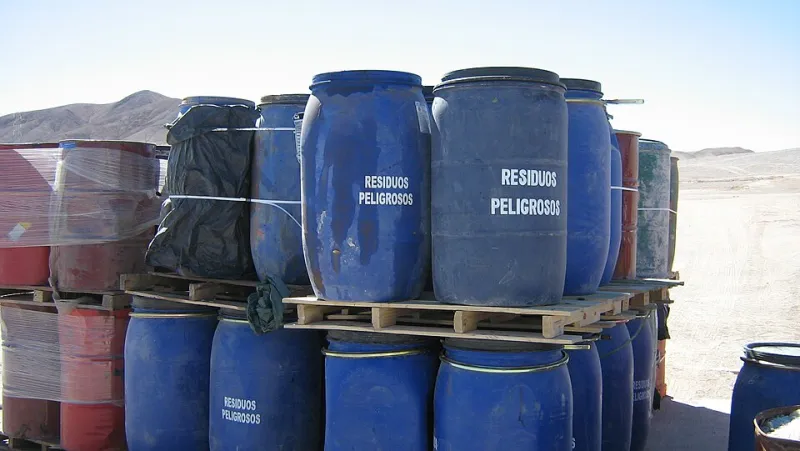
Photo: Mampato, Public domain, via Wikimedia Commons
Hazardous waste accumulation limits occupy a strange position in facility management. They are among the easiest requirements to state and among the most frequently cited violations in inspections. The reason is not negligence in any dramatic sense. It is that accumulation limits depend on a human being writing a date on a container at the moment it first receives waste — and then remembering, weeks later, that the clock is running.
The Rule in Plain Terms
Under the federal generator rules, accumulation time is measured from the date the first drop of waste enters a container, not from the date the container is filled, not from the date it is moved to central storage, and not from the date someone gets around to labeling it. Large quantity generators generally have ninety days. Small quantity generators generally have one hundred eighty. Very small quantity generators have no federal time limit but must still be able to demonstrate the container has not accumulated beyond the quantity threshold that would reclassify them.
State programs may impose shorter periods or additional conditions. The point is that the number is fixed, the start date is fixed, and the burden of proving compliance rests with the generator.
Satellite Areas and the Migration Problem
Most warehouses do not generate waste in one place. A maintenance bay produces aerosol cans and solvent rags. A paint booth produces filters and booth residue. A vehicle service area produces used oil, spent absorbent, and parts-washer sludge. Each of these areas may hold a satellite accumulation container, and satellite containers are permitted to remain at or near the point of generation without starting the ninety-day clock.
Trouble begins when the definition blurs. A satellite container that is allowed to fill, then left in place for weeks, has arguably become storage. A drum moved to central accumulation without its start date recorded on the day it moved has an ambiguous history. A container that is topped off from another container has a new first-waste date that no one wrote down.
Each of these is a small, human moment. Inspectors see them as evidence of a system that does not control its own containers.
Date Marking: The Detail That Gets Litigated
The regulatory language is modest: the container must be marked with the date accumulation began. The practical implication is that any container without a legible, accurate date is presumed to be out of time until the facility proves otherwise.
That presumption is difficult to reverse. A manifest showing no shipments in four months, an inspection log with sparse entries, and a drum with no date is not a case about a missing marker. It is a case about an unaccounted container of hazardous waste.
Container Condition and Labeling
Accumulation requirements extend beyond time. Containers must be in good condition, must not leak, must be compatible with their contents, must be closed except when waste is actively being added, and must be labeled with the words hazardous waste and the accumulation start date. Incompatible wastes must be segregated.
Warehouse realities test all of this. A drum used as a temporary work surface has its lid off. A container of corrosive waste sits on a mild steel rack. A stack of containers is arranged by available space rather than by compatibility. None of these practices is malicious, and all of them are visible.
Inspection Logs and the Week Nobody Wrote Anything
Weekly inspections of central accumulation areas are a standard requirement for larger generators. The inspection record is the single most persuasive document a facility can hold when the question is whether a practice was followed or merely described.
When the log shows an unbroken chain of weekly entries in the same handwriting, with identical phrasing and no observations, an inspector notices. What regulators look for is evidence of a functioning process: notes on a corroded bung, a container relocated out of a walkway, a lid replaced. A log that records nothing for a year looks less like diligence than like paperwork completed in a single sitting.
Three Scenarios Worth Walking Through
The booth filter backlog. Filters accumulate in a satellite container that is never quite full. After several months the container is moved to central storage and dated on the day of the move. The ninety-day clock begins late, and the true accumulation period is invisible on paper.
The drum that gets topped off. A fifty-five gallon container receives waste from three different process areas over six weeks. Only the first entry date is known, and no one records it. When shipped, the container has no defensible start date at all.
The forgotten corner. A pallet of containers sits behind racking during a busy season. By the time it is discovered, the shipment window has passed. The facility now has a disposal problem and a disclosure decision.
Building a Practice That Survives Scrutiny
Facilities that manage this well tend to share a few habits. Containers are dated and labeled at the point of first waste, in the same motion. Satellite areas are sized so they fill within weeks rather than months. Movement to central storage is recorded with a date and initials. Weekly inspections are done by rotating staff with an eye toward observations rather than confirmations. And a monthly review reconciles the containers on the floor against the shipment calendar, identifying anything approaching its limit while there is still time to act.
None of this requires sophisticated technology. It requires a container that is marked the day it begins to fill, and a person whose job includes looking.