Groundwater Doesn't Respect Fences: A Property Owner's Guide to Off-Site Migration Liability
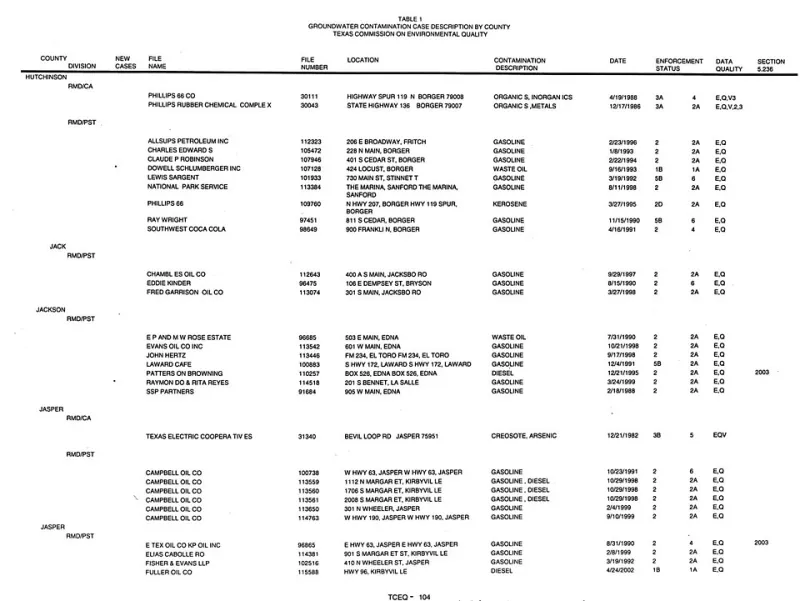
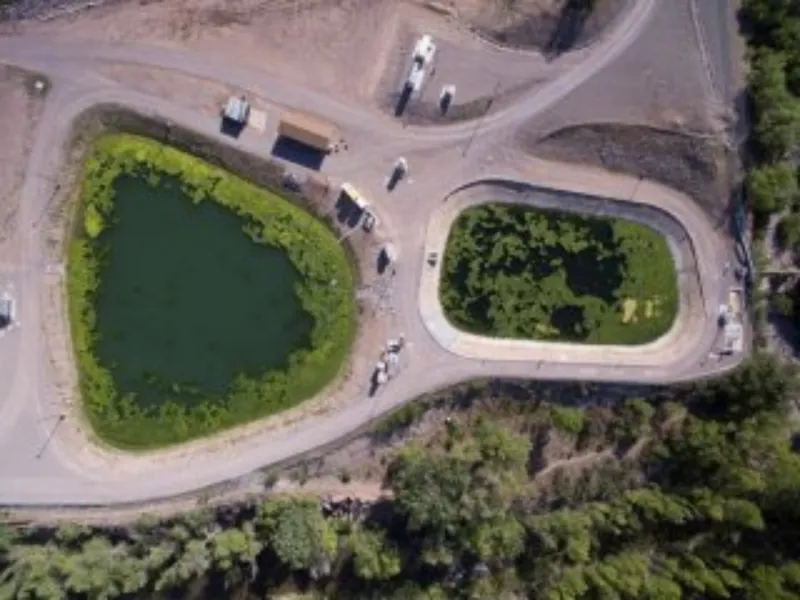
Photo: Texas Groundwater Protection Committee, CC BY 4.0, via Wikimedia Commons
The Plume Has No Regard for Your Survey
A deed describes boundaries with precision. Groundwater ignores them entirely. When a solvent release, fuel leak, or historical disposal practice on a neighboring parcel sends contamination drifting beneath the fence line, the receiving property owner inherits a problem that is legally real, financially significant, and logistically tangled.
Off-site migration is one of the most misunderstood liability scenarios in American environmental law. Many owners assume that if they didn't cause the contamination, they won't be held responsible for it. Under the federal Comprehensive Environmental Response, Compensation, and Liability Act (CERCLA), that assumption is only partly true — and the exceptions matter.
Who Pays When the Source Is Next Door
CERCLA imposes strict, joint and several liability on four categories of parties: current owners, past owners, generators, and transporters. A current owner whose land received migrating contamination is technically a liable party, even with clean hands. Relief exists — most notably the bona fide prospective purchaser (BFPP) defense and the innocent landowner defense — but both require that the owner conducted all appropriate inquiry into the property's condition before acquisition. An owner who skipped environmental due diligence cannot later claim innocence about a plume a Phase I ESA would have flagged.
For owners who qualify for BFPP status, protection hinges on ongoing obligations: cooperating with response authorities, complying with institutional controls, and exercising "appropriate care" regarding identified contamination. If a neighboring plume worsens and the owner did nothing, that defense can erode.
The Commingled Plume Problem
When contamination from two or more sources merges into a single groundwater plume, determining each party's share becomes genuinely difficult. Regulators and courts approach this in several ways:
- Source attribution studies using chemical fingerprinting — comparing compound ratios, degradation byproducts, and isotope signatures — to distinguish one party's release from another's.
- Volumetric or mass-based allocation, where consultants estimate each source's contribution to the total contaminant mass.
- Joint and several enforcement, in which the agency pursues one owner for the entire cleanup and leaves allocation to private litigation or contribution claims.
The practical consequence: the owner with the most solvent balance sheet often pays first and recovers later. Cost-recovery and contribution actions under CERCLA Sections 107 and 113 allow a party that cleaned up a commingled plume to seek its share from other responsible parties — but statutes of limitation and litigation costs make early documentation invaluable.
Insurance: The Policy Most Owners Forgot They Have
Commercial general liability policies written before the mid-1980s routinely covered gradual pollution events without exclusions. Owners and successor entities holding old occurrence-based policies may still have coverage for contamination discovered today. More recent policies typically contain absolute pollution exclusions, though limited environmental impairment liability coverage is available on the standalone market.
Key steps for any policyholder facing a migration claim:
- Locate all historical policies, including those of acquired or predecessor companies.
- Provide timely notice to every potentially responsive carrier — late notice is a common basis for denial.
- Avoid admitting causation in correspondence while the investigation is ongoing.
What to Do the Moment You Suspect the Source Is Next Door
Speed and documentation define the difference between a recoverable expense and an unrecoverable one.
Order your own assessment. A Phase II investigation on your parcel establishes baseline conditions and begins building the evidentiary record. Sampling locations, analytical methods, and chain-of-custody documentation must meet litigation standards from day one.
Notify the state agency. Most state programs require reporting of discovered contamination above action levels. Voluntary, prompt reporting also positions the owner favorably in later allocation discussions.
Preserve records. Lease files, historical aerial photographs, Sanborn maps, and prior environmental reports on the neighboring parcel may establish when the release occurred and who controlled the property at the time.
Engage counsel before engaging the neighbor. Well-intentioned direct negotiations can waive privileges or compromise later contribution claims. Legal strategy should precede outreach.
Evaluate government pathways. Some state funds and EPA programs provide reimbursement or cost-share for innocent parties, and brownfield grants occasionally cover off-site source investigations.
The Compliance Dimension
For facility managers, off-site migration is as much an ongoing compliance issue as a one-time legal event. Continuing obligations — monitoring wells, land use restrictions, reporting requirements — attach to properties enrolled in state voluntary cleanup programs. Missing a reporting deadline or altering a monitoring network without approval can forfeit liability protections that took years to secure.
Bottom Line
A migrating plume converts a neighbor's problem into your balance sheet item unless it is met with fast assessment, careful documentation, and a clear-eyed view of the liability framework. Owners who treat the first sampling event as the opening move in a long allocation game — rather than a routine site visit — consistently fare better when the invoices arrive.
If contamination has appeared on your property and the source appears to be off-site, an experienced environmental contractor and environmental counsel should be engaged in parallel, not in sequence. The record you build in the first ninety days will shape the next five years.