Follow Your Nose: Five Odors That Deserve a Work Order, Not a Shrug
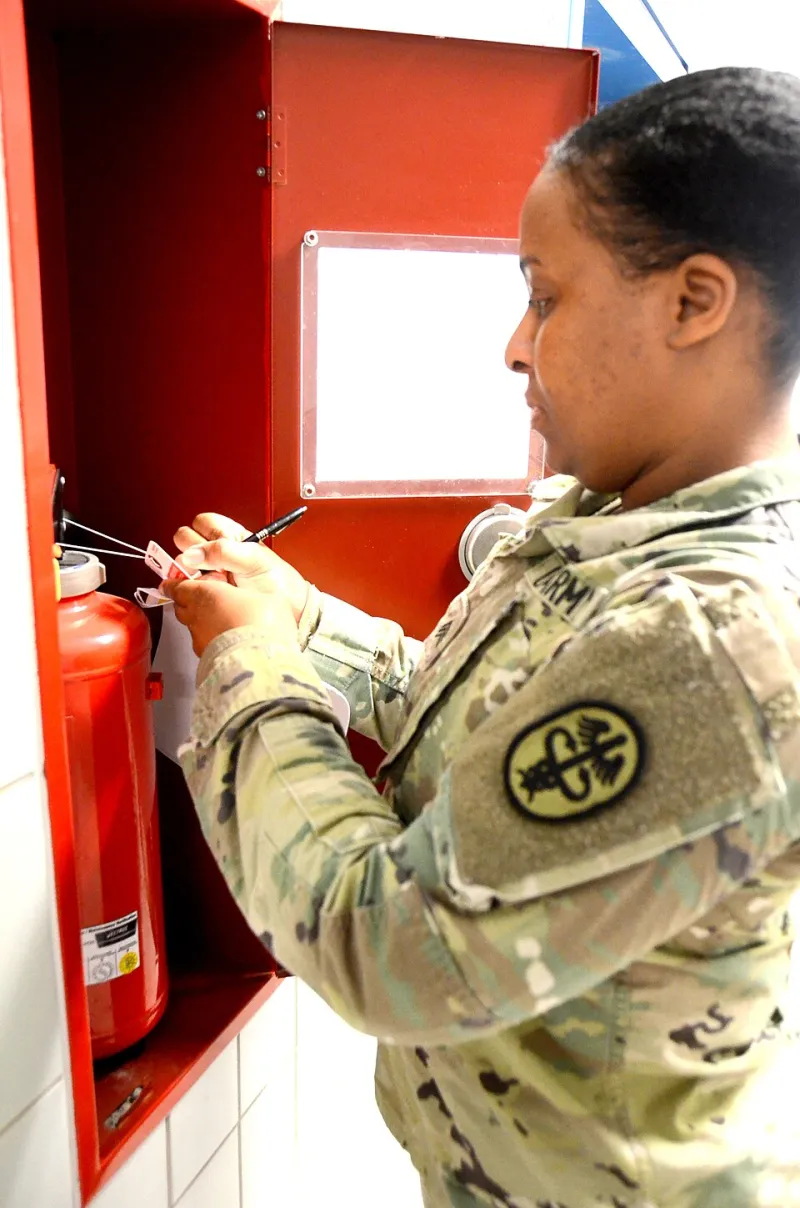
Photo: U.S. Army USAG-RP by Keith Pannell, Public domain, via Wikimedia Commons
Facility managers spend thousands on air monitoring, gas detection, and continuous emissions systems. All worthwhile. But the cheapest instrument on site clocks in at zero dollars, requires no calibration contract, and comes standard with every employee on the floor: the nose.
Human olfaction can flag certain volatile compounds at concentrations well below what most fixed detectors register. The problem isn't sensitivity — it's habituation. Smells that arrive gradually get explained away, absorbed into the background hum of an industrial building until someone outside the walls notices first. And a neighbor noticing first is how odor complaints become enforcement files.
Here are five odors that should trigger a work order, not a shrug.
1. The Sweet, Sharp Bite of Solvents
That acetone-or-fruity tang near the paint line, the parts washer, or the loading dock usually means VOCs are going somewhere they shouldn't — an open container, a failing lid seal, a ventilation hood that quietly died months ago.
Escalate when: the smell is noticeable more than ten feet from the source, or returns every morning in the same corner. Check container lids, verify exhaust fans are actually running (feel for airflow, don't trust the switch position), and log the location. Recurring solvent odor in a consistent spot is a containment failure announcing itself.
2. Rotten Eggs: Sewer Gas
Hydrogen sulfide in a restroom, basement, or near floor drains is not a plumbing nuisance. Sewer gas indicates a dried-out trap, a cracked line, or — worse — methane and H2S accumulation in an enclosed space. Beyond the odor threshold, H2S deadens the sense of smell itself, which means a smell that "disappears" may signal rising concentration.
Escalate when: anyone reports it more than once. Ventilate, re-charge drains with water, and if it persists, get a combustion or multi-gas meter into the space before sending in a person.
3. Burning Insulation: The Hot Electrical Smell
That acrid, fishy-plastic odor near a panel, a motor, or a ceiling grid is overheated wiring insulation or a motor winding on its way out. It is the single most actionable smell on this list because it precedes a fire, sometimes by hours.
Escalate immediately. Thermal-scan the electrical room, check for warm breaker faces, and don't defer to the next maintenance cycle. Facilities that act on this smell the first time rarely get a second warning.
4. Diesel Fumes Indoors
Diesel exhaust belongs outside. When it shows up in the office wing, the break room, or near the dock doors, the usual suspects are a truck left idling at the apron, a failing door seal, or — in colder climates — a generator or boiler with an exhaust problem and a prevailing wind pushing it back inside through the makeup-air intake.
Escalate when: it's detectable in occupied space at all. CO and NO2 ride along with diesel odor, and neither announces itself. Trace the intake path, enforce idle-free zones at the dock, and check whether the HVAC is pressurizing the building or begging for air.
5. The Sweet Chemical Note That Shouldn't Be There
Ethylene glycol (antifreeze) has a distinctly sweet smell; some refrigerant leaks and certain process chemicals carry a similar note. Sweet odors in a mechanical room or near a chiller often mean a glycol loop is weeping or a heat exchanger is passing fluid where it shouldn't.
Escalate when: the smell pairs with damp spots, unexplained fluid, or a boiler/chiller that keeps losing charge. A slow glycol leak under a slab is a groundwater problem waiting for a Phase II investigation — catch it at the sniff stage and it's a repair line item instead.
Make the Nose Official
The fix isn't a poster that says "report strange smells." It's a simple odor-log protocol: what, where, when, who else noticed. Thirty seconds per entry. Patterns emerge within weeks, and patterns are what separate a one-off from a failing system.
Your employees already smell everything on this list. The only question is whether your process lets them do something about it.