Buying the 2 A.M. Call in Advance: The Case for Pre-Negotiated Emergency Response
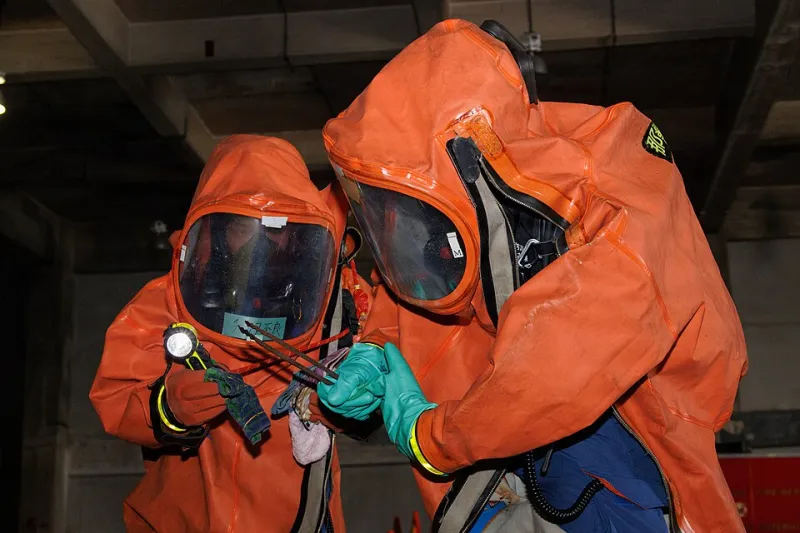
Photo: U.S. Marines MCIPAC by Pfc. Dulce Alvarez Lemus, Public domain, via Wikimedia Commons
There are two ways to buy emergency environmental response in the United States, and only one of them is good.
The common way: a release happens at 2 a.m. — a drum gets clipped by a forklift, a tank overfills, a hydraulic line lets go near a storm drain. The on-call manager searches "spill response near me," calls the first name that answers, and accepts whatever mobilization fee, hourly rate, and disposal markup shows up on the invoice. The bill arrives three weeks later, three to five times what a planned engagement would have cost, from a contractor whose credentials nobody checked.
The better way costs money every year and almost nothing at 2 a.m. It's called a retainer, and if your facility stores any quantity of oils, fuels, chemicals, or regulated waste, it deserves a line in the budget.
What Crisis Pricing Actually Costs
Emergency mobilization carries structural premiums: after-hours labor rates, priority dispatch, and the simple fact that a vendor who knows you have no alternative has no reason to sharpen a pencil. Add the disposal side — waste pulled from an uncontrolled release often gets classified as more expensive to handle than the same material managed routinely — and a routine incident becomes a five-figure event before the sun comes up.
Then there's the quality risk. An unvetted responder who mislabels waste, misses a reporting deadline, or leaves residue that fails post-cleanup sampling hands you a second problem stacked on the first. State agencies have little patience for botched cleanups; the enforcement conversation after a bad response is worse than the one after a good one.
What a Strong Retainer Locks In
Not all response agreements are created equal. A contract worth signing should specify:
- A guaranteed arrival window — not "as soon as possible," but a committed response time for your geography, with escalation terms if it's missed.
- Pre-agreed rate schedules for labor, equipment, and mobilization, indexed and capped, so the invoice reflects a negotiation you had while calm.
- Locked disposal pricing by waste stream, or at minimum a defined markup over manifest cost.
- Liability terms that actually protect you — insurance certificates verified annually, clear allocation of responsibility for residual contamination, and named accountability for regulatory notifications.
- Familiarity with your site. The best retainers include an annual walkthrough. A responder who already knows where your drains, tanks, and access routes are works faster and bills fewer hours.
- Defined scope boundaries. What's included in the retainer fee versus billed separately should be unambiguous — ambiguity in a response contract is a billable ambiguity.
Selling It to the CFO
The finance conversation is straightforward if you frame it as risk transfer rather than a service subscription. Put three numbers on the table:
- The modeled emergency cost — what a single unvetted response runs at crisis rates, drawn from industry benchmarks or, better, from what a peer facility actually paid.
- The retainer cost — typically a modest annual fee plus contracted rates.
- The asymmetry — the retainer is a known, budgetable expense; the crisis purchase is uncapped, unbudgeted, and arrives attached to the worst week of your year.
Then add the soft multiplier: SPCC and stormwater plans that reference a named, contracted responder read better in an agency audit. Insurers notice. So do the underwriters who price your environmental liability coverage.
The A1 Position
Preparedness is the through-line of every credible environmental program, and emergency response is the last place preparedness usually gets funded — because it's invisible until the night it isn't. Companies that pre-negotiate their worst-case scenario aren't being pessimistic. They're being priced correctly.
Budget the 2 a.m. call in January, and it stops being an emergency in every sense but the clock.