Shared Containers, Shared Consequences: Six Ways Multi-Tenant Parks Inherit Each Other's Hazardous Waste
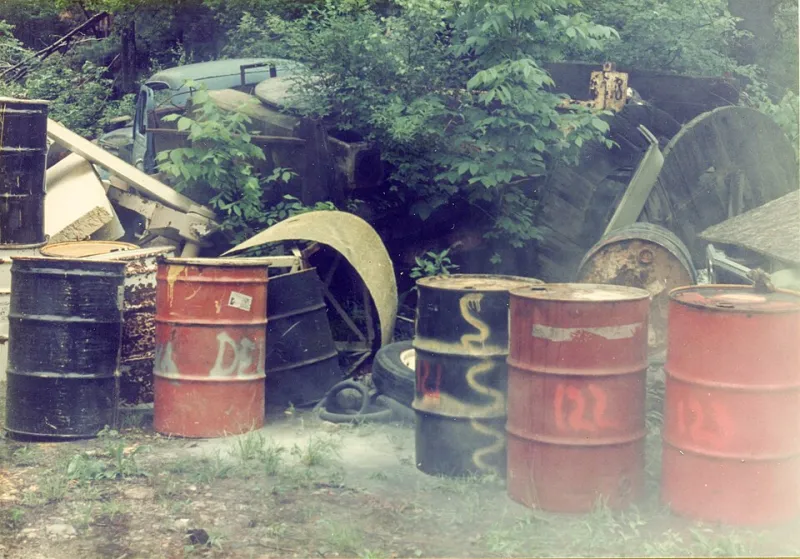
Photo: Massachusetts Dept. of Environmental Protection, CC BY 2.0, via Wikimedia Commons
Hazardous waste law attaches to the generator — the person whose act or site produced the waste. In a single-tenant facility, that is a clean line. In a multi-tenant industrial park with shared loading docks, common dumpsters, and a rotating cast of vendors, the line dissolves fast. Under EPA rules and the laws of most states, a business can acquire generator obligations for waste it never made. Here are six ways that happens, and the controls that prevent each one.
1. The Common Dumpster With an Uncommon Contents Problem
Failure pattern: Tenants in a shared park use a communal roll-off or compactor. One tenant — often a new or small operation — starts depositing spent solvents, paint waste, or contaminated rags. When the container is sampled during a transfer station inspection, every tenant with access becomes a potential contributor, and the disposal facility refuses the load.
The fix: A written waste charter for shared containers, signed by every tenant, specifying permitted waste types with prohibitions listed explicitly. Add periodic load checks — a documented visual inspection before pickup — and a lease provision making tenants liable for contamination they cause.
2. Vendor-Delivered Waste You Didn't Order
Failure pattern: A cleaning contractor or equipment servicer generates waste on your site — spent parts washer fluid, used filters, sludge from a pit cleaning — and quietly consolidates it into your storage area or, worse, into your container destined for a licensed hauler. Your manifest now profiles waste that originated elsewhere.
The fix: Contract language requiring vendors to remove their own waste, plus a receiving procedure: nothing enters your waste storage without a waste profile and a responsible party named on paper.
3. Co-Generation by Lease: When the Landlord Inherits the Stream
Failure pattern: A tenant abandons drums or a contaminated machine shop and vacates overnight. Under several state programs and EPA's generator standards, the property owner who takes possession of abandoned hazardous materials can be deemed the generator — and must count that waste toward their own accumulation limits and LANDS disposal restrictions.
The fix: Environmental lease covenants requiring tenants to remove all regulated materials at vacate, a walk-through at every lease turnover, and an escrow or security deposit sized to cover a worst-case cleanout.
4. The Manifest That Says "Non-Hazardous" and Shouldn't
Failure pattern: A waste broker profiles a mixed stream as non-hazardous to win the bid. The load is rejected, re-tested, and re-classified as hazardous — after your facility signed the manifest as the generator. Mis-profiled shipments are one of the most common paths to enforcement for businesses that thought they were buying a bargain.
The fix: Generator knowledge requirements under 40 CFR 262 mean you cannot outsource characterization entirely. Require analytical support for any profile you sign, and review the receiving facility's acceptance records annually.
5. Accumulation Area as Public Utility
Failure pattern: Your satellite accumulation drums, stored properly under your own generator status, become the convenient disposal point for a neighboring tenant's used oil or waste fuel. Nobody intended co-mingling, but co-mingling is what the lab will find.
The fix: Locked, signed, and inspected accumulation areas. Access control is not paranoia; it is the cheapest liability insurance in the waste program.
6. The Broker Who Vanishes
Failure pattern: A waste is shipped to a broker who consolidates loads from dozens of small generators, then folds or loses its permits. Under the manifest system, your facility remains on the hook as the generator — and joint and several liability under CERCLA does not care whose signature was on the中间 transport paperwork.
The fix: Vet transporters and TSDFs against EPA's enforcement and compliance history database before the first shipment, and confirm the ultimate destination facility on every manifest, not just the first intermediary.
One Principle Underlies All Six
Generator status follows custody. Wherever your business touches a waste stream — by lease, by container, by vendor, by signature — it acquires a stake in that stream's lawful management. The controls above cost a fraction of a single remediation response, and they convert a fuzzy shared-disposal environment into a documented, defensible chain of responsibility.
For facility managers overseeing multi-tenant properties, an independent audit of waste handling practices — container by container, lease by lease — is the A1-standard starting point.