Your Parking Lot Is a Water Asset: Pricing the New Wave of Stormwater Credit Programs
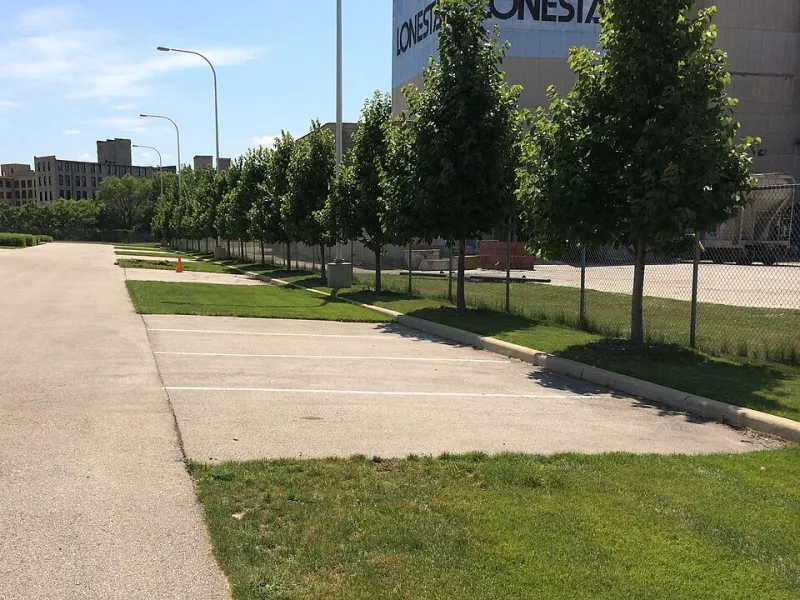
Photo: Aaron Volkening, CC BY 2.0, via Wikimedia Commons
For decades, the stormwater draining off a commercial parking lot was treated by regulators as a problem to be permitted and by owners as a cost to be minimized. That framing is changing. A growing number of US municipalities and utilities — from Washington, D.C.'s pioneering retention credit trading program to fee-in-lieu and incentive structures in Philadelphia, Minneapolis, and across the Puget Sound region — have created markets where retained stormwater has a measurable dollar value. The impervious asphalt behind your building, in other words, may be an unpriced asset.
How the New Programs Work
The mechanics vary by jurisdiction, but three models dominate:
Credit trading. A property that retrofits to retain more runoff than regulations require — through permeable pavement, bioretention planters, or subsurface detention — can sell the excess retention capacity to developers who cannot achieve it on their own sites. Washington, D.C.'s stormwater retention credit market is the most mature example, with credits trading at prices that can meaningfully offset retrofit capital costs over time.
Stormwater fee discounts. Most utilities now bill commercial properties based on impervious area. Reducing effective imperviousness through green infrastructure earns ongoing fee reductions — typically 30 to 60 percent or more for aggressive retrofits — a recurring saving that compounds over the life of the asset.
Fee-in-lieu and grant offsets. Some programs let owners fund off-site retention projects in exchange for compliance credit, or offer matching grants and expedited permitting for voluntary retrofits that exceed code.
Start With an Impervious Surface Audit
Before any of this can be priced, you need numbers. A practical audit maps every square foot of rooftop, pavement, and compacted gravel, then calculates the site's existing retention performance against current regulations. Most owners are surprised by the ratio: parking and circulation areas routinely account for 40 to 60 percent of a commercial site's impervious footprint, and they are also the cheapest surfaces to retrofit.
The audit should also capture what you are already doing. Existing detention basins, swales, and landscaped areas may qualify for retrofit credits or reduced fee classifications that the property has never claimed.
A Checklist for Deciding Whether the Engineering Spend Pays
Not every program justifies capital investment. Before committing, evaluate:
- Program maturity. Is there an established credit market or a codified fee discount, or a pilot program that could change? Mature programs with published transaction prices are far easier to underwrite.
- Credit price or discount magnitude. Compare the annual value — fee savings plus any credit revenue — against retrofit cost per acre treated. Paybacks under ten to fifteen years are generally compelling for stabilized assets.
- Regulatory trajectory. Is your municipality under a consent decree or MS4 permit pressure that will tighten retention requirements? Retrofits made ahead of a mandate avoid retrofit-at-any-price economics later.
- Site suitability. Soils, depth to groundwater, and utility congestion determine whether green infrastructure is a planter-box project or a structural redesign.
- Co-benefits. Reduced ice management, urban heat mitigation, LEED or portfolio certification points, and leasing appeal all carry value that pure stormwater math omits.
From Obligation to Position
The strategic shift here is conceptual as much as financial. A property owner who understands their stormwater performance in quantified terms can respond to a fee increase, a new regulation, or a buyer's due diligence question from a position of information rather than reaction. In some markets, documented retention capacity is already appearing in valuation discussions as a feature, not a footnote.
The window matters. Credit prices and incentive levels are richest early, when municipalities need voluntary participation to hit watershed targets. Owners who audit now, while programs are young, position their properties to capture value that late movers will simply pay for.
An A1-rated site assessment — impervious mapping, retrofit screening, and program eligibility review — is the natural first step, and it costs far less than the asphalt you are sitting on.