Ghost Tenants, Real Liabilities: A Landlord's Duty When the Contaminator Left Decades Ago
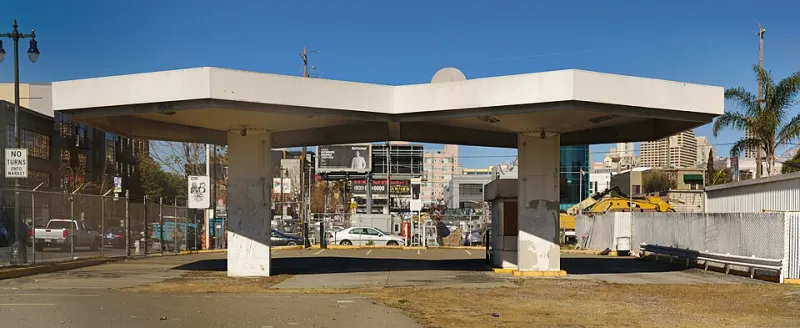
Photo: Dilaxe321, CC0, via Wikimedia Commons
Commercial landlords routinely inherit problems they never created. Few are as expensive, or as legally counterintuitive, as contamination left behind by a tenant who vacated the property decades ago. Under the federal Comprehensive Environmental Response, Compensation, and Liability Act (CERCLA), ownership alone can be enough to assign liability, regardless of who actually caused the release. For landlords of aging industrial and commercial parcels across the United States, the question is not whether the polluter existed, but whether the polluter can still be found, funded, or pursued.
Why the Landlord Pays First
CERCLA's liability scheme is famously broad. Current owners and operators of contaminated property fall within the statute's reach even when the contamination predates their tenure. Courts have generally held that a landlord who did not participate in, and had no knowledge of, a tenant's disposal practices may still be a covered "owner" — though the innocent landowner and bona fide prospective purchaser defenses offer pathways to protection, provided the owner conducted appropriate all appropriate inquiries before acquisition and maintains continuing obligations afterward.
The practical consequence is that the party with the deepest pockets and the clearest title often moves to the front of the regulatory queue. State programs, from New Jersey's Industrial Site Recovery Act to California's regional water board cleanup orders, frequently follow similar logic. The long-gone tenant — a defunct plating shop, a dry cleaner that folded in 1988, a metal finisher whose principals have passed away — offers little in the way of recoverable assets.
Tracing the Ghost: Reconstructing Historical Operations
Before any defense can be raised or any cost recovery pursued, landlords need to know what actually happened on the parcel. Reconstructing a tenant's operations from decades past is detective work, but it is far from impossible.
- Sanborn fire insurance maps document building footprints and industrial uses going back to the late nineteenth century, often labeling uses like "degreasing" or "oil storage."
- City directories and reverse phone listings, available through libraries and services such as the Nationwide Environmental Title Research databases, identify tenant names and business types year by year.
- Aerial photography archives, including historical USDA and USGS imagery, reveal tank fields, lagoons, and stained soils that predate current improvements.
- State environmental agency files may contain inspection records, violation notices, or tank registration documents tied to the former tenant.
- Interviews with long-serving neighbors, retired municipal inspectors, and former employees frequently surface the details no document ever captured.
This record matters for two reasons. First, it defines the scope of any assessment — knowing a tenant ran a vapor degreasing operation points investigators toward chlorinated solvents like trichloroethylene (TCE) rather than petroleum. Second, it establishes the causal chain a landlord will need to seek contribution from the tenant's successors, insurers, or other potentially responsible parties.
Defenses Worth Knowing
Landlords are not without options. Beyond the innocent landowner and prospective purchaser defenses, several avenues deserve attention:
The innocent landowner defense requires demonstrating that the contamination occurred before acquisition and that all appropriate inquiries — generally a Phase I Environmental Site Assessment meeting ASTM E1527 standards — were performed at the time of purchase, with no known conditions ignored afterward.
Contribution claims under CERCLA Section 113 allow a landlord who has paid cleanup costs to pursue other responsible parties, including corporate successors that absorbed the tenant's operations or assets. Successor liability doctrine varies by state, but courts have held acquiring corporations liable where the successor is a mere continuation of the predecessor or where the transaction was structured to evade obligations.
Historical insurance archaeology has become a quiet growth industry. Comprehensive general liability policies issued to industrial tenants in the 1960s through 1980s often contained no pollution exclusions, and long-tail claims can sometimes be brought against estates or insurers decades later. Locating a policy — even a partial one — can shift millions of dollars in cleanup costs.
Divisibility arguments, recognized by the Supreme Court in Burlington Northern v. United States, allow a party to prove its share of contamination is separately attributable and recover contribution accordingly.
None of these defenses is automatic, and each carries procedural requirements that are unforgiving of delay. Engaging environmental counsel and a qualified consultant early is not optional; it is the difference between a defensible position and an unallocated bill.
Structuring Tomorrow's Leases Today
The most cost-effective remediation is the one never needed, and lease drafting is where forward-looking landlords exercise control. Several provisions merit consideration in any industrial or commercial lease:
- Environmental covenants requiring tenants to comply with all applicable environmental laws, to disclose any reportable releases promptly, and to bear the cost of investigation and remediation arising from their operations.
- Defined use restrictions that prohibit activities historically associated with contamination — solvent cleaning, metal plating, fuel dispensing — unless specifically negotiated and insured.
- Environmental insurance requirements, with the landlord named as an additional insured on pollution liability coverage, sized to plausible remediation exposure.
- Audit and access rights permitting periodic inspections and environmental sampling during the tenancy, when records and witnesses are still available.
- Survival and indemnification clauses that expressly survive lease termination, preserving the landlord's recourse after the tenant has moved on.
- Exit protocols requiring a baseline environmental assessment at move-out, establishing the property's condition at a defined point in time.
Landlords should also maintain their own environmental file for the property — assessments, correspondence, inspection reports — so that the next decade's inquiry does not begin from a blank page.
An A1-Rated Approach to Legacy Risk
Legacy contamination is not a reason to avoid industrial property; it is a reason to approach it with discipline. The landlords who fare best are those who investigate before they acquire, document during the tenancy, and negotiate lease terms that assign environmental responsibility to the party best positioned to control it.
For owners confronting a ghost tenant's legacy today, the sequence is straightforward: assemble the historical record, assess the current condition, identify every available defense and cost-recovery path, and engage regulators from a position of preparation rather than surprise. The mess may be decades old. The strategy for managing it cannot afford to be.